Professional & Knowledgable Law Team

Thursday, September 20, 2012

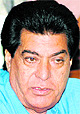
Former Cong minister Henry loses citizenship


Jalandhar, September 19
The Ministry of Home Affairs (Foreigners Division) has ceased the Indian citizenship of senior Congress leader and transporter Avtar Henry.
In a communication to Principal Secretary (Homes) DS Bains, Undersecretary, Union Government, SN Garg has said the Centre, while exercising powers under Sections 9(2) of the Citizenship Act-1955, had ceased Henry’s Indian citizenship from the date he acquired British citizenship and passport in 1969.
Henry, however, is at liberty to acquire Indian citizenship by following the procedures laid down under the law.
In the letter, Garg stated that an inquiry report forwarded by the Additional Director General of Punjab Police specified that the office of the Deputy Commissioner, Jalandhar, was not in possession of any record that could be used to ascertain whether Henry had submitted an application to acquire Indian citizenship or not. Henry had acquired an Indian passport in 1981 and subsequently in 2004. The passport can be issued only to an Indian citizen.
But the records of the Foreigners Division of the Ministry of Home Affairs confirmed that the division had not granted Indian citizenship to Avtar Henry from 1981 onwards.
The letter sent by Garg to Bains stated that the fact that he had acquired a British passport conclusively proved that he had acquired British citizenship and thereby automatically ceased to be an India citizen under Sections 9(1) of the Citizenship Act-1955 from the date of the acquisition of British citizenship.
Case history
Henry had landed in a trouble following allegations of dual citizenship levelled by his son Gurjit Singh Sanghera. The Union Home Ministry had summoned him to Delhi to clear his stand.
Henry was asked to appear before the ministry on July 10, 2012. Henry had appeared before SM Garg and recorded his statement.
In November 2009, Sanghera had accused his father of possessing two passports. In his complaint, Sanghera had alleged that Avtar Singh ‘Sanghera’ had been to England on an Indian passport, which he had procured from the passport office in Delhi by posing as Lakhbir Singh Sanghera’s son. Lakhbir Singh Sanghera is, in fact, Henry’s elder brother and his father’s name is Joginder Singh.
The complainant had further alleged that Henry had made a false averment in the British passport that his “father”, Lakhbir Singh Sanghera, had died in 1905. Lakhbir Singh had actually died in November 2006.
The complaint further read that Avtar Henry (‘son’ of Lakhbir Singh) took British citizenship on the old passport issued by the Indian Government. He later managed to get a passport from the British government and returned to India in September 1969. He yet again got a passport prepared from the Jalandhar passport officer, showing himself as the son of Joginder Singh (the real father) and born in Pakistan.
The complainant had sought charges under Sections 420, 465, 467, 468, 471 and 494 of the IPC against Henry. The Jalandhar police acted on the complaint, but the files were gathering dust at the SSP’s office.
The case was later reopened by the city police after Sanghera, through his friend Ajay Sehgal, an RTI activist, moved the Punjab and Haryana High Court.
The court had directed the Union Home Ministry, Punjab Chief Secretary and the DGP to complete an ongoing probe into a complaint against Henry in four months.
Son relieved
Gurjit Singh Sanghera has expressed satisfaction at the union government’s decision to cease Henry’s Indian citizenship. Talking to The Tribune, Sanghera claimed that he would move an application before the city police Commissioner seeking his arrest.

Alberta's top court upholds judge ruling to take toddler off life support Read it on Global News: UPDATE: Alberta' s top court upholds judge ruling to take toddler off life support


EDMONTON - Alberta's top court has upheld a judge's ruling that a two-year-old child allegedly abused by her parents should be taken off life support.

The Appeal Court ruled that each parent will be allowed a final 20-minute visit with the girl, if Edmonton police have the resources to accompany them. Another stipulation is that the parents can't make the visit at the same time.

The parents have been charged with aggravated assault, criminal negligence causing bodily harm and failing to provide the necessities of life - charges that could be upgraded if the child dies.

The court dismissed an application that its decision be stayed so as to allow an appeal to the Supreme Court.

A Court of Queen's Bench justice agreed with doctors last week that it is in the girl's best interest to be removed from machines keeping her alive and to be provided with palliative care.

Paramedics found the girl and her twin sister, both malnourished and suffering from injuries, in an Edmonton home May 25.

The girl at the centre of the ruling was in cardiac arrest and is now in a coma. Her sister is recovering. A brother was in home as well, but he was not suffering any injuries and is now in foster care.

The parents, who cannot be named, have been denied bail and are not allowed to have contact with each other.

The Court of Queen’s Bench ruled Friday that the child – being called “M” because she cannot be identified – must be taken off life-support. Medical experts testified the girl had suffered "profound and irreversible brain injury." She can't move on her own and requires the support of a machine to breathe. She has no upper brain function and is not expected to ever recover.

Friday, August 24, 2012

Bill for separate status to Sikhism today


AMENDING ARTICLE 25
 Article 25 of the Constitution of India describes Sikhism, Jainism and Buddhism as parts of the Hindu religion
 This has resulted in avoidable confusion across the world about the independent identity of these three religions, says the community
 This Bill proposes to amend Article 25 with a view to distinctively refer to Sikh, Jain and Buddhist religions along with Hinduism
New Delhi, August 23
After the amendment of the Anand Marriage Act for separate registration of Sikh marriages, the community is now setting its eyes on amendment of the Constitution to recognise Sikhism as a full-fledged religion.
At present, Article 25 of the Constitution of India describes Sikhism, Jainism and Buddhism as parts of the Hindu religion. Sikhs have long been seeking amendment to this Article to grant Sikhism an independent identity under the law.
In a significant move, Lok Sabha Speaker Meira Kumar today allowed Shiromani Akali Dal’s Khadoor Sahib member Rattan Singh Ajnala’s private member Bill to amend Article 25 of the Constitution to meet the community’s pressing demand.
The Bill titled ‘Constitution Amendment Bill 2012’ seeks to drop Explanation II in Article 25, which — while guaranteeing a right to freely profess, practice and propagate religion — defines Sikhism, Jainism and Buddhism as components of the Hindu religion.
Clause 1 of Article 25 of the Constitution provides the freedom of religion to everyone in India. Sub clause (b) of Clause 2 of Article 25 says: “notwithstanding the freedom of religion, the Government can make any law pertaining to the social welfare and reform or the throwing open of Hindu religious institutions of a public character to all classes and sections of the Hindus”.
The problem arises in Explanation II of sub clause (b) in Clause 2 of the said Article, which says: “the reference to Hindus will be construed as including a reference to persons professing the Sikh, Jaina and Buddhist religions and the reference to Hindu religious institutions shall be construed accordingly as well.”
The statement of object and reasons behind Ajnala’s private member Bill listed for introduction in the Lok Sabha tomorrow wants Explanation II dropped and says, “The drafting of sub clause (b) of Clause 2 of Article 25 tends to ignore the separate and distinct identities of Sikh, Jain and Buddhist religions. Rather, it shows that these religions are either part of the Hindu religion or associated with it. This has resulted in avoidable confusion across the world about the independent identity of these three religions. This Bill proposes to amend Article 25 with a view to distinctively refer to Sikh, Jain and Buddhist religions along with Hindu religion.”
The Bill also refers to the recommendation to amend Article 25 along similar lines made by the National Commission on Review of the Constitution headed by former Chief Justice of India Justice MN Venkatachaliah during the NDA regime.
The Bill at hand is a constitutional amendment Bill and the second major bill moved as a private bill by Sikh MPs. The Anand Karaj Amendment Act was earlier moved as a private member’s Bill in Rajya Sabha by former MP Tarlochan Singh.

Lawyers protest against starting of evening courts


Ludhiana, August 23
Lodging their protest against starting of evening courts, city lawyers observed a strike today.
As per the instructions of the Punjab and Haryana High Court, a few days ago cheque-bounce cases involving an amount of Rs 50,000 were entrusted to four evening courts.
The timing of evening courts has been fixed from 5 pm to 7 pm. The District Bar Association president Jagmohan Singh Warraich said that the lawyers were under immense pressure due to the startng of evening courts. He said a meeting of president and secretaries of 62 bar associations of the district and the sub-division was held at Moga and a decision was taken to protest against the starting of evening courts.
 The decision means that cases will now be heard in district courts from 5pm-7pm. Lawyers have, however, alleged that pendancy of cases are higher in HC and should be the ones with evening court sessions. Sunil Garg, president Moga Bar Association, said. 
Lawyers will boycott evening courts and all courts on Saturdays. Moreover, a demonstration would be held at the High Court on August 31, he added.

Monday, July 23, 2012

Pranab Mukherjee elected new Indian president


NEW DELHI: Former finance minister Pranab Mukherjee was elected Indian president on Sunday after votes from national and state lawmakers were counted in the race for the mainly ceremonial post.

Some analysts believe Mukherjee, a veteran from the ruling Congress party, may take a more active approach to the job than his predecessors as India struggles with a parliamentary deadlock and slowing economic growth. Mukherjee, 76, collected 69 percent votes, easily beating his only rival P A Sangma, 64, a former lower house speaker and tribal leader from the remote northeast who was backed by the main opposition Bharatiya Janata Party (BJP).

"I would like to thank the people of this great country for conferring this distinction by electing me to this high office," Mukherjee told crowds of cheering supporters gathered outside his residence in New Delhi.

India's president, who takes up residence in a 340-room palace built in the capital for the British viceroy during colonial rule, is chosen by legislators from the two houses of parliament and state assemblies.

The next general election, due to be held in 2014, is predicted to be close, which could lead to a period of complex horse-trading between numerous national and regional parties trying to form a stable coalition government.

"It's in this turbulent scenario Mukherjee as a president will be able to steer the ship of the state. He's a troubleshooter," said Sanjay Kumar, an analyst at India's Centre for the Study of Developing Societies.

Mukherjee may also try to use the presidential position to foster a behind-the-scenes deal between warring parties who have reduced parliament to a stalemate in recent sessions. He has a reputation as a canny negotiator, and was described by leaked US embassy cables in 2009 as "the ultimate Congress Party fixer and operator" with clear ambitions at that time to become prime minister.

Mukherjee commands widespread respect across party lines, but his performance as finance minister was criticised for his failure to push through reforms to further liberalise India's economy.

His exit from the ministry raised investors' hopes that Prime Minister Manmohan Singh, who took over the finance portfolio, could embark on long-awaited moves. Mukherjee's success on Sunday was a welcome victory for the embattled the Congress party, which has been beset by a string of graft scandals, policy reversals and a raft of disappointing economic data.

Sangma congratulated his opponent but criticised the Congress for running an "exceptionally partisan and political" campaign for the head of state. Mukherjee will be formally sworn in on Wednesday, taking over for a five-year term from Pratibha Patil, India's first woman president. 

Wednesday, July 4, 2012

SC: panchayats enjoy Constitutional status

 
NEW DELHI: Panchayats can formulate their own programmes of economic development and social justice as they enjoy a Constitutional status, the Supreme Court has ruled.
The apex court said Article 40 and Articles 243 to 243-O envisages that the framers of the Constitution had envisaged village panchayat to be the foundation of the country's political democracy - a decentralised form of government where each village was to be responsible for its own affairs.
Bench of Justices G S Singhvi and S J Mukhopadhya passed the ruling while allowing an appeal filed by the village panchayat of Calangute in Goa challenging a Bombay High Court order which had taken the view that the local body cannot challenge any decision taken by the executive authority.
In this case, the Additional Director of Panchayat-II had overruled a resolution passed by the panchayat quashing the permission granted to a private company for carrying out certain commercial activities.
Though the panchayat appealed against the official's decision the high court dismissed it following which it appealed in the apex court.
"The primary focus of the subjects enumerated in the Eleventh Schedule is on social and economic development of the rural parts of the country by conferring upon the Panchayat the status of a constitutional body.
"Parliament has ensured that the Panchayats would no longer perform the role of simply executing the programmes and policies evolved by the political executive of the state. 
"By virtue of the provisions contained in Part IX, the panchayats have been empowered to formulate and implement their own programs of economic development and social justice in tune with their status as the third tier of Government which is mandated to represent the interests of the people living within its jurisdiction", the Bench said. 
The apex court said the Constitution's Preamble, Part IV and Part IX must guide our understanding of the Panchayati Raj institutions and the role they play in the lives of the people in rural parts of the country.
"The conceptualisation of the village panchayat as a unit of self government having the responsibility to promote social justice and economic development and as a representative of the people within its jurisdiction must be borne in mind while interpreting the laws enacted by the state which seek to define the ambit and scope of the powers and the functions of Panchayats at various levels.
"An analysis of Article 40 and Articles 243 to 243-O shows that the framers of the Constitution had envisaged village panchayat to be the foundation of the country's political democracy - a decentralised form of government where each village was to be responsible for its own affairs," the Bench said.
According to the court by enacting the Constitution (Seventy-third Amendment) Act, Parliament has attempted to remedy the defects and remove the deficiencies of the Panchayati Raj system evolved after independence, which failed to live up to the expectation of the people in rural India.
"The provisions contained in Part IX provide firm basis for self-governance by the people at the grass root through the institution of panchayats at different levels.
"For achieving the objectives enshrined in Part IX of the Constitution, the state legislatures have enacted laws and made provision for devolution of powers upon and assigned various functions listed in the Eleventh Schedule to the Panchayats", the court said.
Hence it directed the High Court to issue notices on the issue raised by the panchayat and decide the matter on merits. PTI 

TIME LINE: THE CASE
2006: Calangute panchayat grants permission to builder for construction at Porbawado, Calangute. Locals complain that builder has blocked access to well and chapel.
MARCH 2008: Following complaints, Calangute panchayat passes resolution for revocation of occupancy certificate.
MARCH 2009: The panchayat passes another resolution and revokes permission to the company. 
2009: Company challenges the ruling on grounds that it was contrary to rules of natural justice.
JULY 2009:Panchayat revokes earlier resolution and issues notice to the company to   stop further construction and fixes site inspection for August 4, 2009.
2009: Company challenges panchayat notice before Additional Director of Panchayat, who passes ex-parte interim order.
JULY 2009: Company applies for permission to use property as guest house, but panchayat rejects application. Company then challenges the decision.
FEBRUARY 2010: Additional Director of Panchayat passes final order, directing panchayat to reconsider application of the company for grant of permission to use the property for running a guest house.  
2010: Panchayat challenges order in High Court, but High Court dismisses petition.
Panchayat then challenges matter before Supreme Court.

Thursday, June 28, 2012

NRI Kidnap Case

Charge sheet against six accused filed in court
Police adds sections of robbery, wrongful confinement, forgery in NRI kidnap case
Chandigarh, June 27
The UT police today filed a charge sheet in the NRI kidnapping-for-ransom case, that was registered on April 10. The charge sheet was filed against six accused and the police added sections of robbery, wrongful confinement, receiving stolen property and forgery in the charge sheet after completing investigations.
The charge sheet was been filed in court under Sections 364-A, 341, 342, 397, 411, 468, 471, 473 and 474 of the IPC.
Navneet Singh Chatha, a Canada-based NRI, was kidnapped for a ransom of Rs 1 crore on April 10. A team of the crime branch of the UT police had rescued him following an extensive operation at Darua village in Kurukshetra.
The NRI's brother in Canada had received a ransom call, demanding Rs 1 crore. The police laid a trap and arrested the six accused who kidnapped the NRI.
The kidnappers fired shots at the police and the police had to open fire. The charge sheet was filed against Pradeep Malik, Nitin, Sanjeev Kumar, alias Soni, Sukhdev, Anil Kumar and Ajit Singh. While Pradeep fired shots at the police, Soni was the owner of the farmhouse where the victim was confined.
Of the six accused, Anil Kumar had three cases of murder registered against him and was a proclaimed offender with the Haryana Police. As per the charge sheet, the police had recovered Rs 12.5 lakh, 300 Canadian dollars, the Honda Accord car of the victim, a Swift Desire car robbed from a person in Panchkula and two mobile phones.
An investigating officer said the NRI was robbed of his purse and belongings at gunpoint in confinement, following which the police added sections of robbery with attempt-to-murder under Section 397 of the IPC.
The Swift Desire car used in the crime was stolen from Panchkula and an FIR in this regard had been registered there. The police had recovered a fake registration certificate of the car and added sections of forgery in the charge sheet.

the caseNavneet Singh Chatha was kidnapped for a ransom of Rs 1 crore on April 10. A police team rescued him following an extensive operation.